
On Diamond Street
Remembering & Forgetting

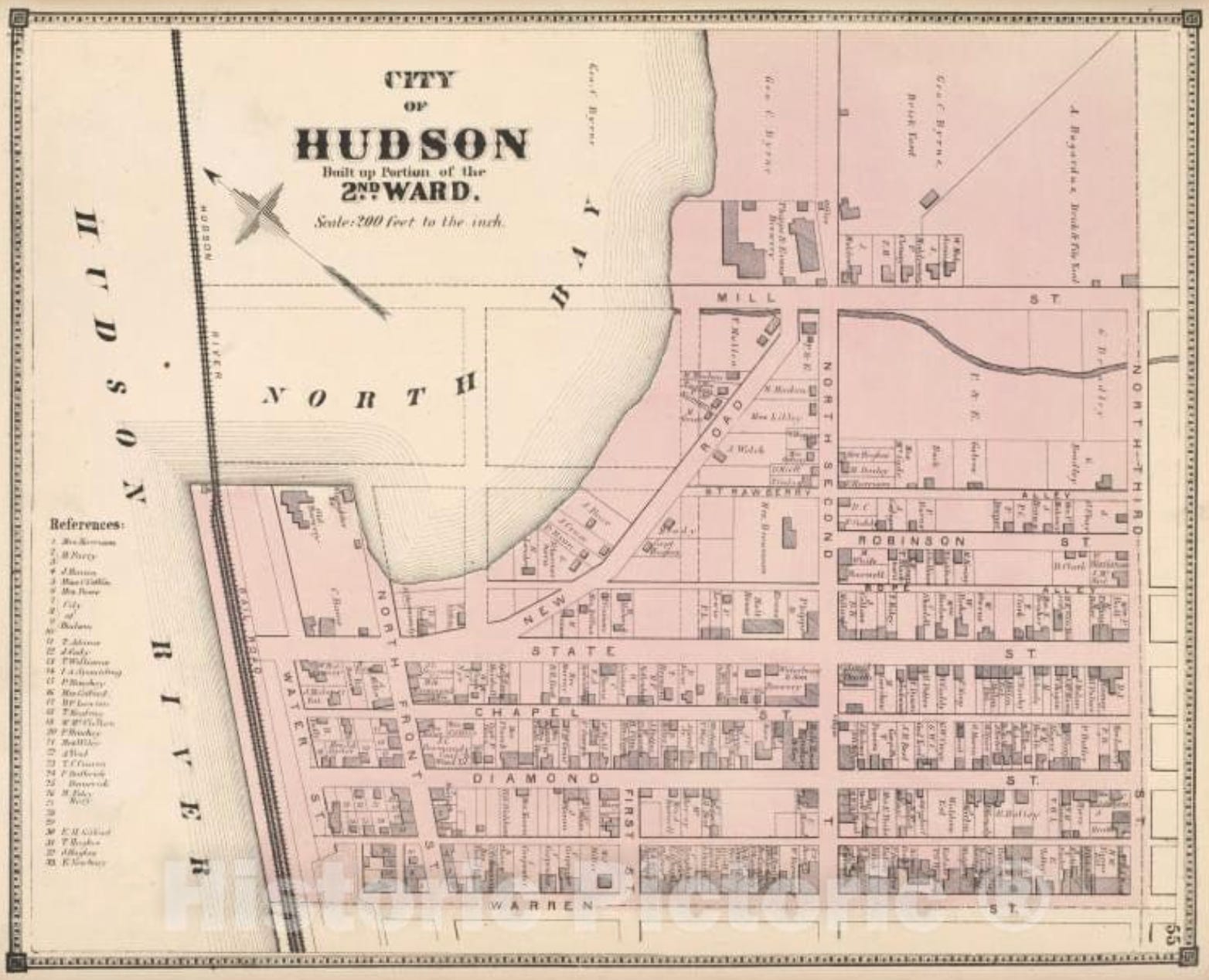
Local history does not record why, in April 1785 – along with Union, Main, and State Streets – Hudson’s founder Thomas Jenkins chose “Diamond” as the name for the street immediately north of Main (now Warren). Later generations of Hudsonians would universally characterize Jenkins as very much like a diamond – a man of impeccable quality, beauty, and value. Historian Gorham Worth called Jenkins “a princely-looking man . . .stately in person, dignified in demeanor, princely in dress and authoritative in air and manner.” Along with building his own spermaceti oil and candle works on Diamond Street, Thomas Jenkins was instrumental in founding Hudson’s first schoolhouse just up the street, as well as many other civic institutions.
By 1926, when the socially beleaguered City of Hudson changed the street’s name to “Columbia,” the city’s repeated boom–and–bust economic cycles had morphed Thomas Jenkins’ avenue of prospect and prosperity to one of poverty and neglect. Today, 9 out of 10 Hudsonians – whether recent transplants or ‘natives’ – will jocularly identify Hudson’s history primarily as known from tales out of Bruce Edward Hall’s 1994 Diamond Street: The Story of the Little Town with the Big Red Light District. Every time I hear this breezy popular volume invoked either as a “good read” or as reliable history, it gets me musing about the mysterious but unmistakable intertwining of remembering and forgetting in the narration of America’s – and every single one of its hometowns’ – history.
The remembering of New York State’s dramatic June 1950 raid of Diamond/Columbia Street’s vice dens surely captures a real aspect of the city’s multifaceted history, but – especially in the face of the recent and ongoing exposure of the darkly cruel and criminal proliferation of misogyny among global elites – it seems remarkably insensitive to complex and unsettling issues of race, class, and gender. A disturbing amount of forgetting goes on every time “Diamond Street” is invoked as synecdoche for this glorious gem of a Hudson Valley rivertown.
Along with his companion Proprietors, the Nantucket Quaker Thomas Jenkins had come to Claverack Landing seeking sanctuary to pursue “life, liberty, and happiness” away from the depredations of the British Navy and privateers whose attacks took such a toll on his and other whaling companies’ ships. These Nantucket, Martha’s Vineyard, Newport and Providence men were all Quakers, and as such were both seekers of and practitioners of the art of peace. Having sacrificed and suffered through the American Revolution, their Quaker faith gave them a firm foundation for aspiring toward peaceful relations with their fellow human beings.
Having established during the War of 1812 Hudson’s first peace society, Quaker minister Hannah Jenkins Barnard’s crusade against war intensified after the 1815 Treaty of Ghent. When her group grew too large to assemble in her home, she asked the Society of Friends if they might use the meeting house, but her brethren Quakers refused her, scandalized by her refusal to believe that God commanded the Israelites to make war on other nations. Indeed, Hannah Barnard was excommunicated for this very independent stance.
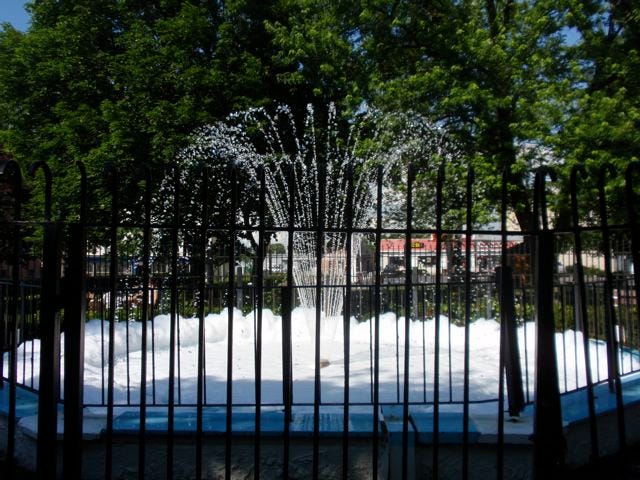
My own introduction to Hudson’s tradition of resisting war came in the form of . . . bubbles. On Flag Day in June 2009, while on a walking peace pilgrimage from Montreal to Manhattan, I arrived in Hudson just after the Flag Day parade had broken up. I had never even heard of Flag Day; passing the Muddy Cup on upper Warren Street, I asked a fellow sitting alone at a sidewalk table how it was that it was celebrated with such fanfare in Hudson.
“Leni Reifenstahl” he replied.
Stopped in my tracks by his answer (shorthand for the fascistic overtones of Hudson’s Flag Day parade), I sat down to hear more from biker, welder, drummer (formerly for Missing Foundation, infamous NYC band in the 80s) and vegetarian Jim Moffitt. As we spoke, a dozen or more people stopped and high–fived Jim – who turned out to be the monkey–wrenching prankster who put the laundry detergent in the Public Square fountain.
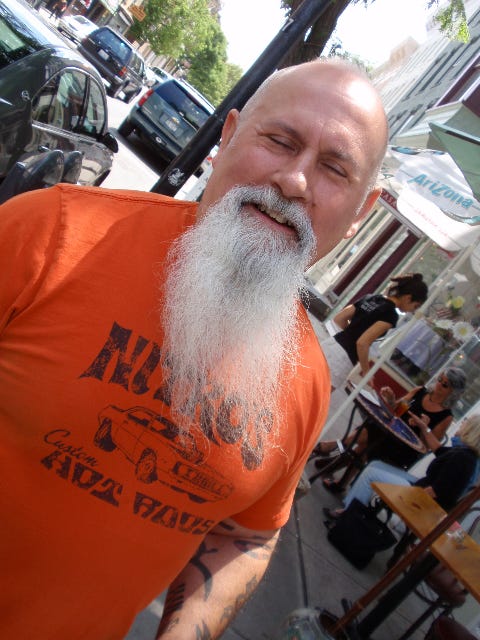
Between Hannah Barnard and Jim Moffitt, Hudson has been home to a long line of advocates for peace, and yet our awareness of their words and deeds is obscured by other sorts of remembering. As surely as selective remembering and forgetting conspired on Diamond Street to obscure all manner of violence waged by those with power on their weaker fellow citizens, our present oblivion obscures our complicity in the Empire’s naked violence against our innocent brothers and sisters in far away places. May we find the courage of Hannah Barnard to speak truth to power, and the bubbling humor of Jim Moffitt to disarm the self–righteous.
I learn so much reading your posts!