
Map, Territory, Me
and all of us

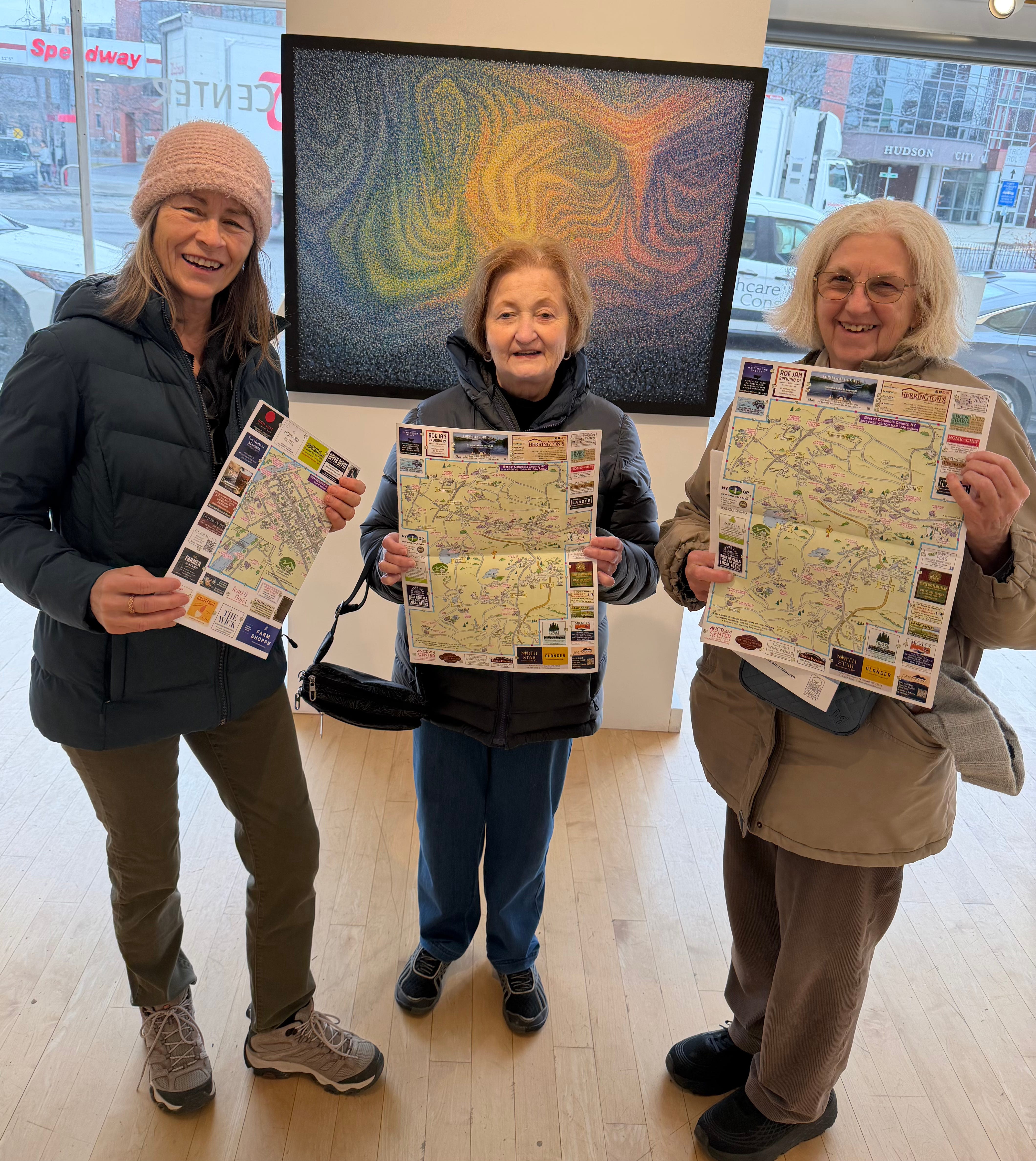
“I don’t do those things,” said the visitor after I gently warned her that Hudson’s parking meter gendarmerie were sure to ticket her car if she didn’t master the digital QR–code phone payment system. I had barely opened the doors to the remarkable Michael Howard exhibition at Lightforms, when Peg and her friend Sherry arrived to view the show yesterday.
Having pointed out the sign next to her car, Peg stepped out, took a photo of it, and returned holding her phone out to me in a clear gesture of “HELP!” We stepped back outside and while I gave her a brief tutorial about QR codes, I sputtered some rant about the digital juggernaut’s continued assault on our once wholly and preciously analog world. Just as Peg had tapped her screen to save herself from a ticket, a woman entered the gallery bearing a stack of Hudson/Columbia County Visitor Maps; it was Mary Hart, the creator of the map, making her seasonal round to replenish supplies round town.
Discovering that we had both studied Geography as undergraduates way back in the 1970s, Mary and I compared notes about drawing maps by hand, Leroy Lettering Sets, and other now nearly vanished analog cartographic techniques. Recognizing our little quartet of Analog Obsolescence, I couldn’t resist asking Mary, Peg, and Sherry to pose with copies of Mary’s marvelously user–friendly bird’s eye maps.
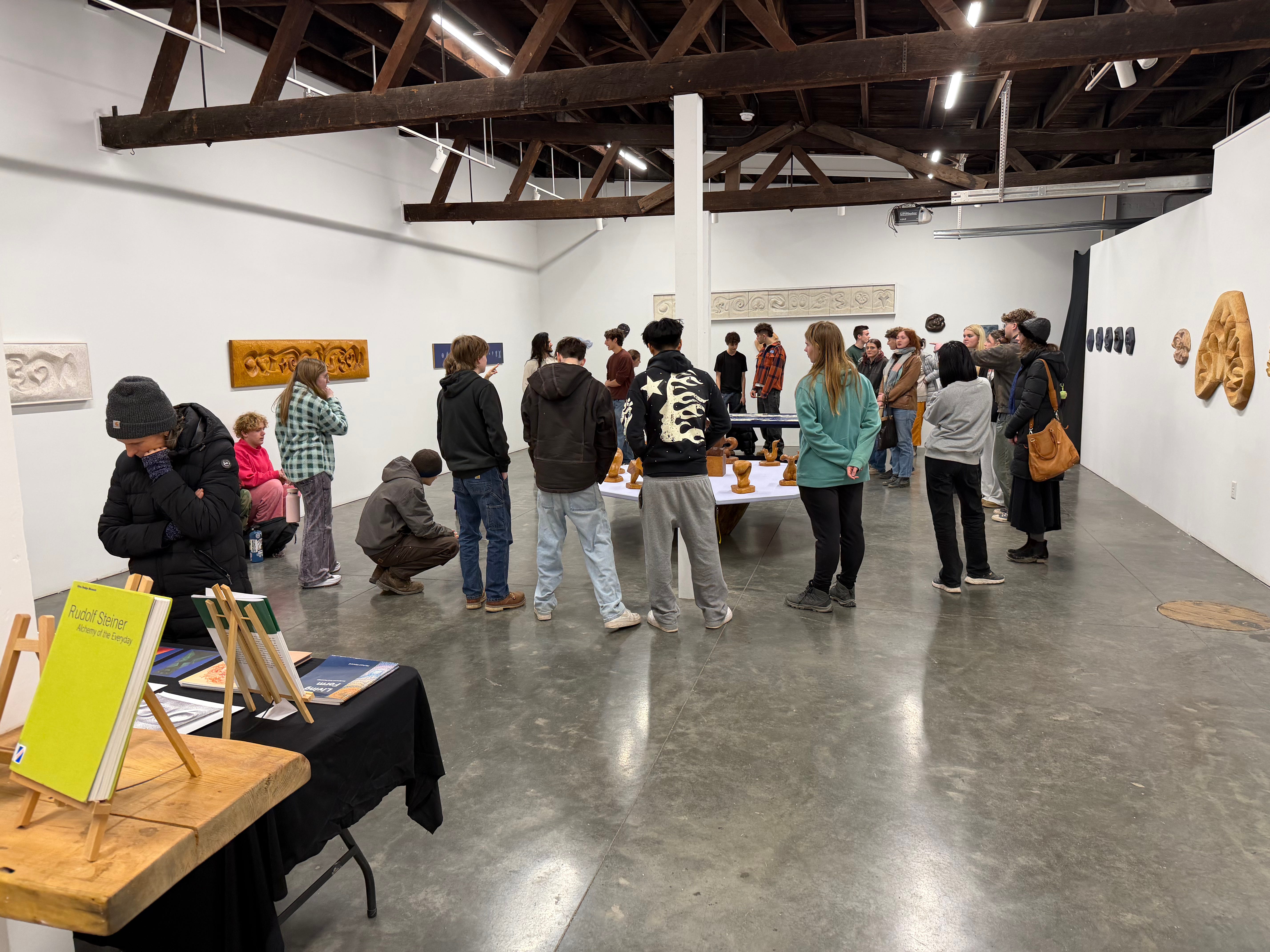
A moment later two dozen Hawthorne Valley High School students arrived at the gallery with their art teachers to take in both Michael Howard’s “Visible Music, Visible Speech” show and (upstairs) Larry Young’s “Face to Face,” poignant pastel portraits of the artist’s friends and colleagues. It was wonderful to hear the teachers guide the students’ exploration of the art by asking a series of questions that invited them to stick close to their observations of the paintings and sculptures – and even to the whimsical creations they made by brushing about piles of basmati rice on a sandbox table at the back of the gallery.
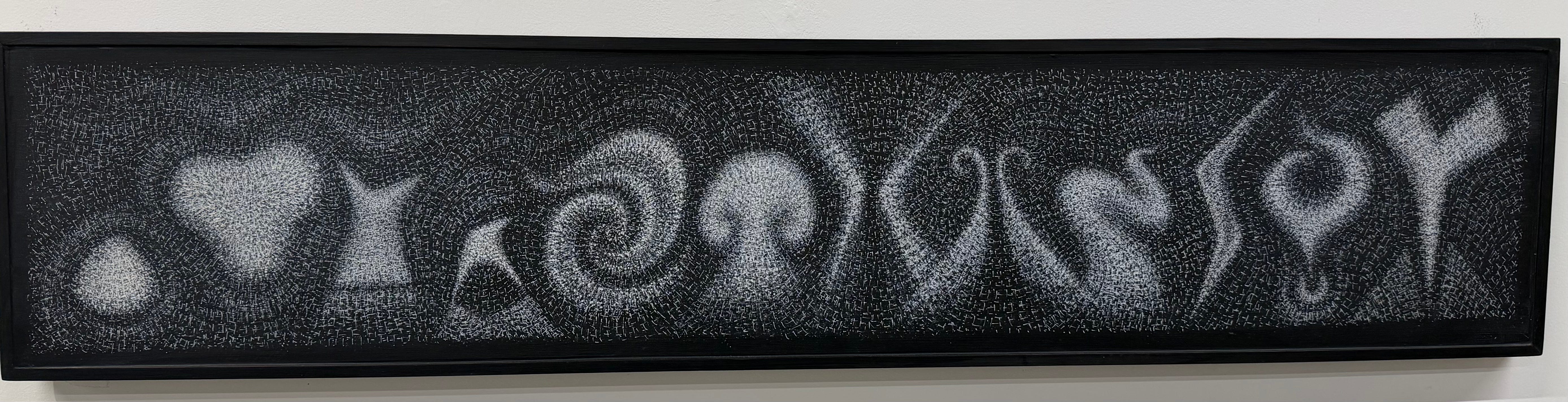
Asked to describe their impressions of Michael Howard’s metamorphic series of sculptural forms, a student named Theo replied: “They all seem so familiar.” With that one honest observation, Theo had intuited his way into the very heart of the mystery of physical form, which Rudolf Steiner had so elegantly expressed in 1903 in his vortex axioms:
The World is a Vortex. Every inward spiral must become an outward spiral. The Human Being must become a Vortex. Everything performed as a Vortex, is magic.
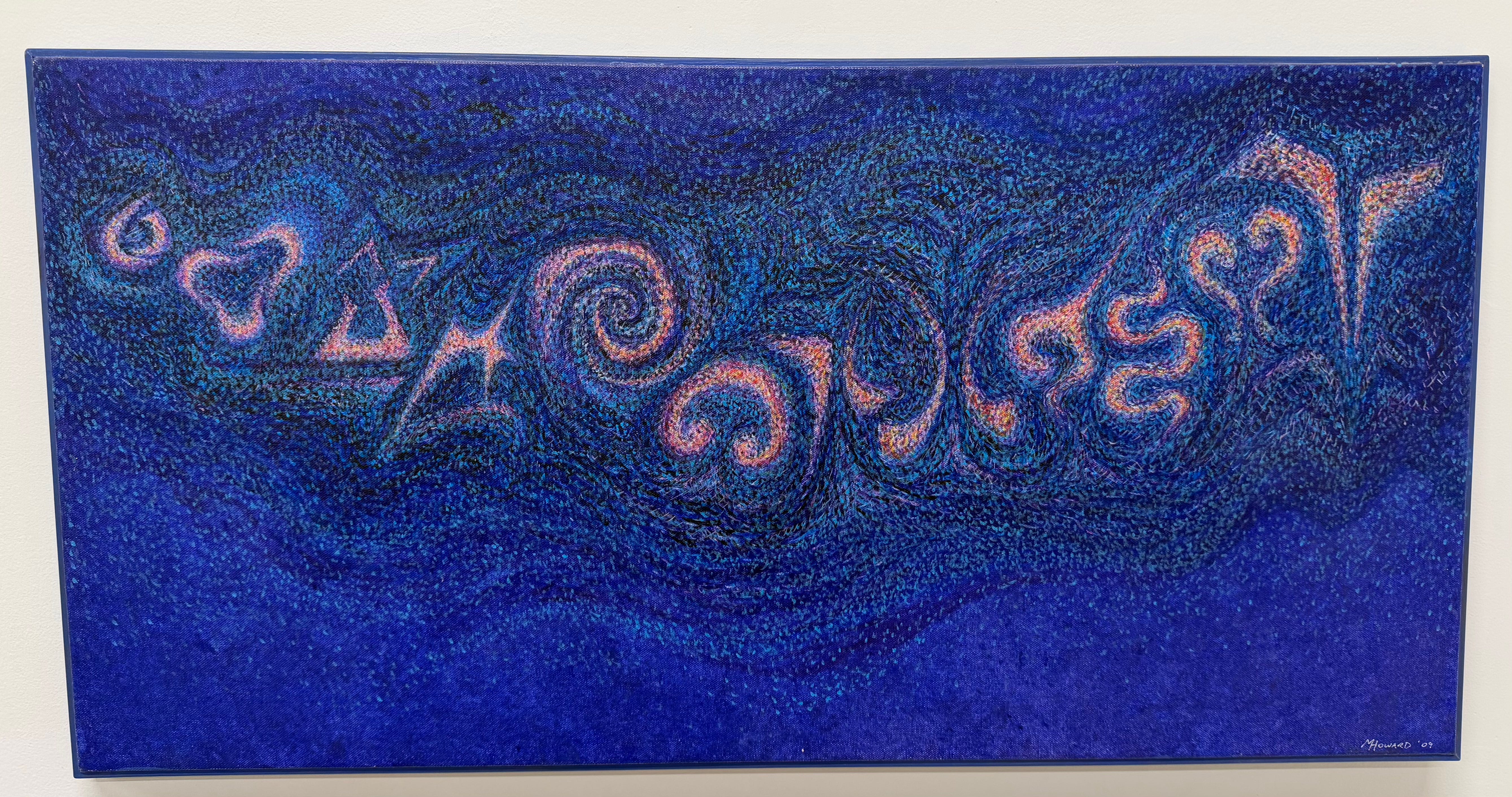
In nearly every work on the wall of the rear gallery, Michael Howard placed a pair of counter–rotating vortices, a shape known to us in ten thousand forms, from the common market mushroom to every organ in the human body to spiral galaxies.
In 1931, in a talk given in New Orleans at the American Association for the Advancement of Science annual meeting, Polish-American scientist and philosopher Alfred Korzybski remarked that “the map is not the territory” and that “the word is not the thing,” encapsulating his view that an abstraction derived from something, or a reaction to it, is not the thing itself. Fundamental to phenomenology’s understanding of self and world, Korzybski’s maxim had no more faithful practitioner than Rudolf Steiner, whose Vortex axioms are a special spiritual scientific subset with which one can grasp hold of Creation in its Macrocosmic, Mesocosmic, and Microcosmic iterations, and by which one can alchemically alter both map and territory.
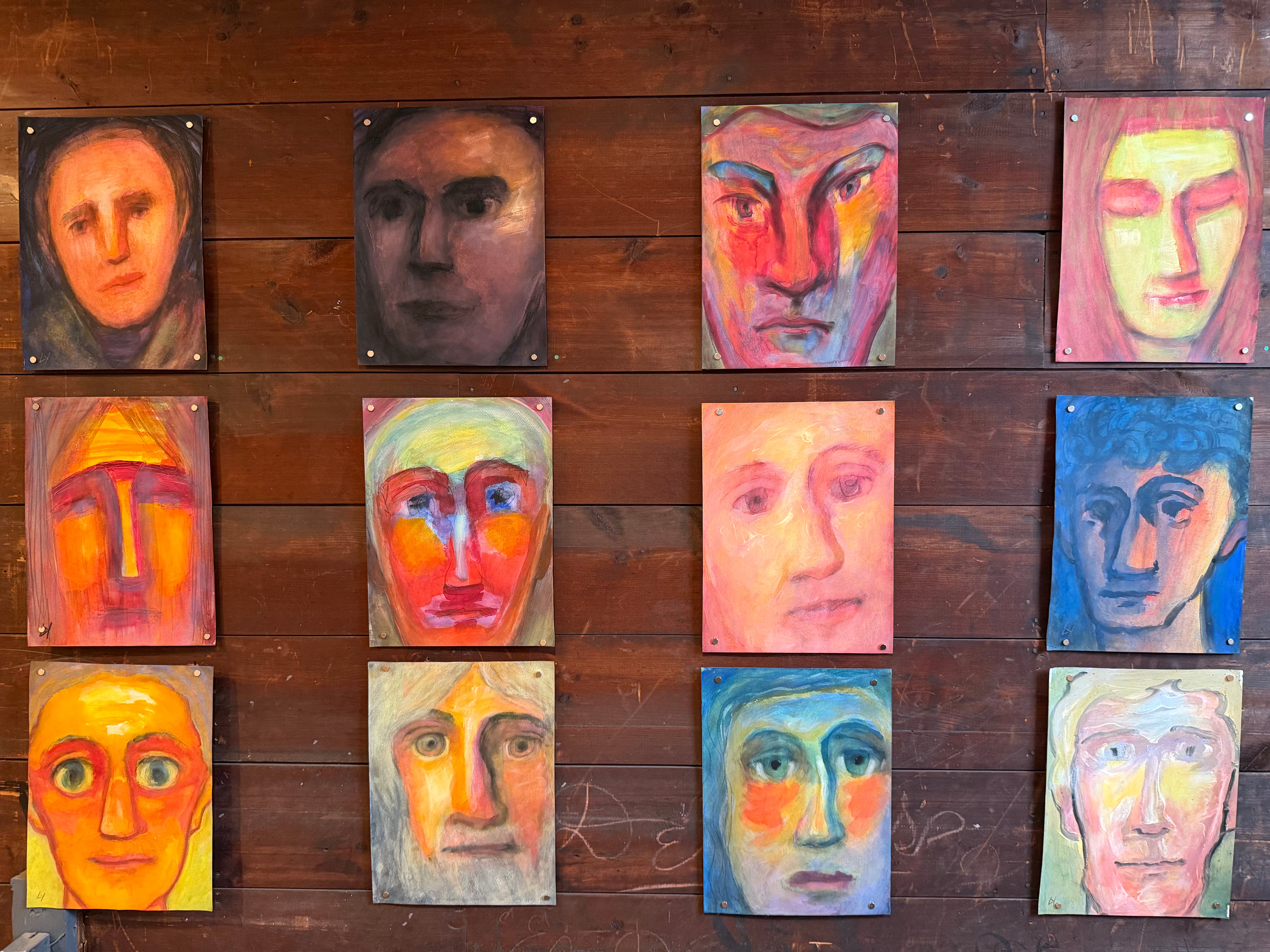
Every single surface and sinew of our faces are embryonically shaped as vortices, coming to momentary shimmering rest in our adult visages. Fleshy maps of our character, our passions, and our destiny, our faces are also testament to the principle that the map is indeed not the territory, for behind each and every human face lie vast and generous supersensible dimensions. Invited into each other’s souls by those fair and fantastic maps, let us, dear friends, openly and compassionately explore each other’s entire soul and spirit territories.